Fixed asset verification is an important process that helps organisations confirm the existence, location and details of their physical assets. From office furniture and IT equipment to machinery and specialised equipment, businesses need reliable asset records to maintain accountability, improve asset visibility and support financial reporting.
However, without regular verification, discrepancies can develop between the physical assets an organisation holds and the information recorded in its fixed asset register.
In this guide, we explain what fixed asset verification involves, why it matters and how organisations can improve the process through professional asset management services and digital technology.
What Is Fixed Asset Verification?
Fixed asset verification is the process of physically checking an organisation’s assets against its existing fixed asset register or other asset records.
The objective is to establish whether recorded assets physically exist, confirm their actual locations and identify discrepancies that require further investigation.
A fixed asset verification exercise may involve checking asset descriptions, identification numbers, serial numbers, locations, assigned departments and custodians.
Organisations may conduct fixed asset verification periodically, during financial year-end activities, before or after relocation, or when significant changes occur in their asset inventory.
Why Is Fixed Asset Verification Important?
Regular fixed asset verification helps organisations maintain more accurate records and improve control over their physical assets.
1. Confirm the Existence of Fixed Assets
Asset records may continue to list equipment that has been moved, replaced or disposed of. Physical verification helps establish whether these assets can still be located and whether discrepancies require investigation.
2. Improve Fixed Asset Register Accuracy
Over time, asset records can become outdated due to unrecorded transfers, incomplete registration or incorrect asset details.
Verification helps identify differences between the physical asset population and the existing register, providing a basis for subsequent correction and reconciliation.
3. Strengthen Asset Accountability
Knowing where assets are located and which departments or personnel are responsible for them supports better internal control.
A properly documented verification process also helps organisations establish clearer accountability for asset movements and custody.
4. Support Financial Reporting and Audit Preparation
Reliable asset information can help finance teams investigate discrepancies and support their reporting and audit processes.
Physical verification findings should be reviewed and reconciled with the relevant financial records. Any accounting adjustments should be assessed and approved by the responsible finance team.
5. Reduce Asset Management Risks
Missing assets, unidentified equipment and outdated location information can create operational and administrative challenges.
Regular verification helps organisations identify these issues earlier and implement appropriate corrective actions.
The Fixed Asset Verification Process
A structured fixed asset verification exercise helps organisations conduct inspections consistently and document findings systematically.
Step 1: Review the Existing Fixed Asset Register
Begin by reviewing the available asset register and relevant supporting records.
This provides the baseline for verification and helps identify the information required during physical inspections.
Step 2: Conduct Physical Asset Inspection
Visit the relevant offices, departments, facilities or designated locations to inspect the physical assets.
Record the asset details observed and compare them against the available register information.
Step 3: Perform Asset Tagging and Identification
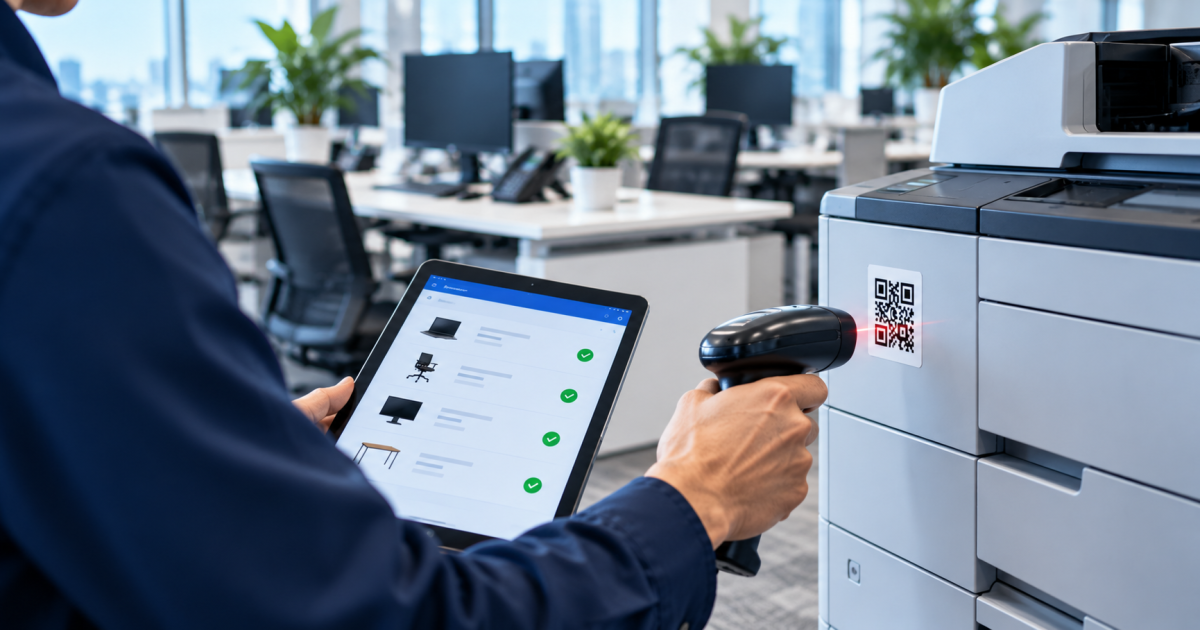
Where appropriate, apply barcode or QR code labels to support unique asset identification.
Asset tagging helps streamline future verification exercises and enables assets to be identified more consistently.
Step 4: Identify and Document Discrepancies
Record exceptions such as:
- Assets listed in the register but not found during inspection.
- Physical assets that are not recorded in the register.
- Assets found at locations different from those recorded.
- Incorrect descriptions or identification numbers.
- Duplicate or incomplete asset records.
These exceptions should be investigated before the asset register is finalised.
Step 5: Reconcile Verification Findings
Compare the physical verification results against the existing fixed asset register and investigate the differences.
This process helps establish a more reliable asset listing and identifies records that require correction or further review.
Step 6: Prepare the Verification Report
Compile the results into clear reports and exception listings.
Depending on the project scope, deliverables may include verified asset listings, missing asset reports, unidentified asset listings, location discrepancies and recommendations for improving asset management procedures.
Common Challenges in Manual Fixed Asset Verification
Organisations that rely entirely on spreadsheets and paper-based records may encounter several challenges during physical verification.
Time-consuming inspections: Large asset populations across multiple locations can require significant time and manpower.
Inconsistent data collection: Different teams may record asset information using different formats or identification methods.
Difficulty tracking progress: Without a centralised process, management may struggle to monitor completed inspections and outstanding discrepancies.
Limited traceability: Paper-based documentation may make it harder to review historical verification findings and subsequent asset movements.
These challenges can be addressed through structured verification procedures, standardised data collection and suitable digital asset management technology.
How Barcode, QR Code and Digital Technology Improve Asset Verification
Technology can help organisations make fixed asset verification more systematic and efficient.
Barcode and QR code labels provide a consistent way to identify individual assets. When used with a compatible mobile device and asset management platform, they can help verification teams retrieve asset records and capture inspection findings.
A digital fixed asset management system can also centralise asset information, record movements, maintain audit trails and support reporting.
The effectiveness of these tools depends on accurate underlying data, appropriate implementation and well-defined asset management procedures.
How AMR Supports Fixed Asset Verification
Asset Management Resources (AMR) provides professional fixed asset management services to help organisations establish accurate asset records and strengthen asset governance.
With over two decades of experience, AMR supports organisations through a structured approach to physical asset verification, asset tagging, register reconciliation and fixed asset management system implementation.
AMR’s services include:
Fixed Asset Verification Exercise (FAVE)
Physical verification of assets across agreed locations and departments, with findings documented to support improved asset visibility and accountability.
Fixed Asset Register Reconciliation (FARE)
Comparison of verified physical asset information against existing fixed asset records to identify discrepancies and support record correction.
Fixed Asset System and Technology (FAST)
Support for fixed asset management systems and technology implementation to help organisations establish more structured asset management processes.
MyAsset365 Fixed Asset Management Platform
MyAsset365 is AMR’s cloud-based Fixed Asset Management and Asset Governance Platform. It supports centralised asset registration, barcode and QR code identification, asset movement tracking, lifecycle management and audit trails.
By combining professional services with digital technology, AMR helps organisations move beyond one-off physical inspections towards more consistent, traceable and sustainable asset management practices.
When Should Your Organisation Conduct Fixed Asset Verification?
Fixed asset verification may be particularly useful when:
- Preparing for financial year-end reporting or an audit.
- Relocating an office, facility or business operation.
- Implementing a new fixed asset management system.
- Reviewing discrepancies in the existing asset register.
- Managing a large or geographically dispersed asset population.
- Establishing stronger asset accountability and governance procedures.
The appropriate frequency and scope depend on the organisation’s asset profile, operational risks, internal policies and applicable reporting requirements.
Improve Your Asset Visibility with AMR
Fixed asset verification is more than a physical counting exercise. It provides organisations with an opportunity to confirm asset information, investigate discrepancies and improve accountability.
With structured verification, reliable reconciliation and appropriate digital technology, organisations can establish a stronger foundation for fixed asset management and governance.
Looking for professional fixed asset verification services?
Contact Asset Management Resources (AMR) to discuss how our FAVE, FARE, FAST and MyAsset365 solutions can support your organisation’s asset management requirements.
Asset Management Resources (AMR)
Website: https://amr.my
Email: sales@amr.my
Phone: +603-8070 2511